

Colonialism as a Temporary Bridge
If the word “colonialism” makes you foam like a rabid dog, stop reading now

Colonialism has earned its place as one of history’s most charged words. In most cases, it conjures images of resource extraction, cultural erasure, and indefinite foreign domination. The moral reflex is immediate: it is wrong, always and everywhere. And yet history, which rarely conforms to absolutes, contains rare cases—never cost-free—where foreign rule acted as a transitional scaffold, helping societies shift from stagnation to sovereignty.
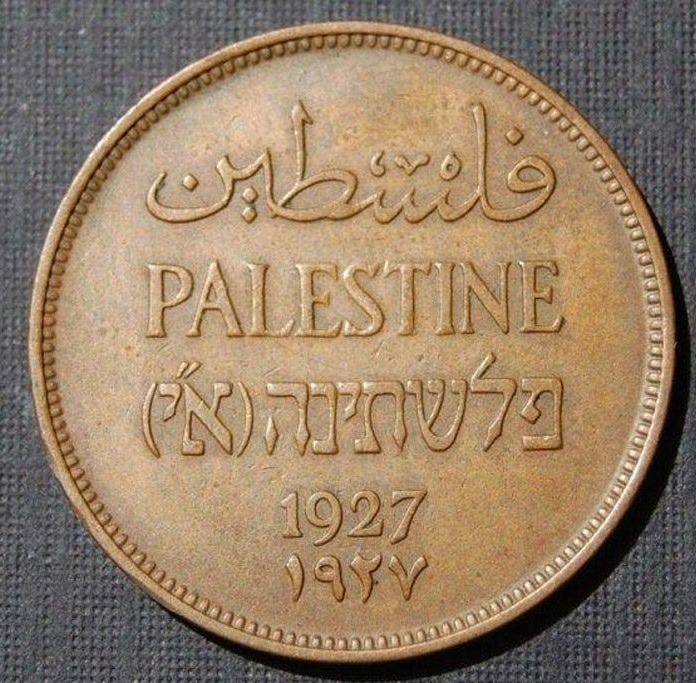
The British Mandate for Palestine (1920-1948), carved by the League of Nations from the ruins of the Ottoman Empire, was not a state for any existing nation but an administrative territory. It introduced modern infrastructure, legal systems, and public health initiatives. The Jewish community leveraged these to lay the groundwork for statehood; parts of the Arab population gained access to education, municipal governance, and international trade. The cost was high: political manipulation, deepening mistrust, and the planting of seeds for a conflict that has yet to be resolved.
Hong Kong flourished economically under British law, blending Cantonese traditions with English common law. But prosperity came without political rights, and London’s ultimate authority loomed large. Singapore’s colonial years established legal and educational systems that propelled its post-independence boom, yet they also entrenched ethnic divides that had to be carefully managed afterward. Botswana emerged from British protection with a relatively clean administrative framework and became one of Africa’s most stable democracies—despite the colonial power’s minimal investment in its development. Namibia left South African administration with functioning institutions but bore the deep scars of systemic discrimination and dispossession.
These cases do not redeem colonialism; they complicate it. They show that under narrow, time-bound conditions—where the aim is not indefinite control but the creation of viable local governance—foreign administration can leave behind more than ruins. But the difference between such interventions and true colonialism is not a matter of scale; it is structural. Colonialism, in its historical sense, is possession without an exit strategy, subordination for the benefit of the imperial center, and often the deliberate reshaping or suppression of local culture to serve that center’s needs. It is about permanence, not transition.
Time-bound administration with a clear mandate to depart is another category entirely. Its legitimacy depends on the transparency of its goals, the enforceability of its limits, and the degree to which it builds the institutions that will outlast it. Conflating this with colonialism erases crucial distinctions and turns historical analysis into slogan. Sometimes that conflation is the product of ignorance; sometimes it is a deliberate political tactic, weaponizing language to foreclose serious debate before it begins.
Let’s put it on the table: not every foreign presence fits the mold of colonialism. If a military administration is designed to stabilize a territory, build functioning institutions, and then hand over power to a local, self-governing entity, it is not colonialism—conceptually, semantically, or historically. It may still be controversial; it may still fail. But it is not empire.
And so we arrive at the present. Imagine a territory fractured by internal violence, locked in a cycle of militancy, bereft of sustainable governance. Imagine an external power stepping in—not to annex, not to expel, but to act as a temporary custodian, providing the ground and framework for a peaceful, self-governing polity. Now ask yourself—before reaching for the word “colonialism,” before defaulting to reflex—could that territory truly rebuild itself into a society free of martyrs, violence, and terror if the external power simply walked away without conditions? I don’t know if your answer will be yes or no. I do know this: calling such an arrangement “colonialism” is either a misreading of history or a choice to demonize. And if you cannot name a thing accurately, you cannot judge its merits honestly.